
Corporate travel and expense management faces a critical, often overlooked vulnerability. While much attention is given to employee expense fraud, a significant portion of financial leakage occurs at the approval stage. Managers rubber-stamping policy violations create a culture of non-compliance and substantial financial loss. However, addressing this requires a delicate balance. Companies must monitor business oversight ethically, ensuring fairness and transparency while utilizing advanced risk monitoring software.
How significant is the issue of manager oversight in the expense approval process, and why do managers rubber-stamp violations?
The challenge of compliance oversight is far more significant than many organizations realize. The issue is rarely malicious intent but rather a combination of outdated systems and audit fatigue. Reviewing thousands of monthly transactions without automation is unmanageable. Managers often lack the necessary contextual intelligence to make informed decisions quickly. When faced with an overwhelming volume of T&E reports, the expense approval process frequently devolves into a rapid click-to-approve exercise. This blind spot allows anomalous spend and duplicate expense detection failures to slip through, costing businesses heavily.
How can organizations ethically track manager risk indicators without compromising corporate culture?
Ethical monitoring relies on transparency, accountability, and the right technology. To ethically monitor risk oversight, companies must transition from subjective manual reviews to objective, AI-driven analytics. This involves utilizing a centralized system that aligns with strict data protection policies and principles of fairness.
A robust corporate travel and expense management system achieves this through several key mechanisms:
- Role-Based Access Control: Precise data visibility is granted based on role and organizational hierarchy.
- Information Relevance: Users only access information relevant to their specific responsibilities, protecting privacy while ensuring policy compliance.
- Transparent Metrics: Utilizing a comprehensive business intelligence platform provides real-time visibility into audit performance and compliance trends.
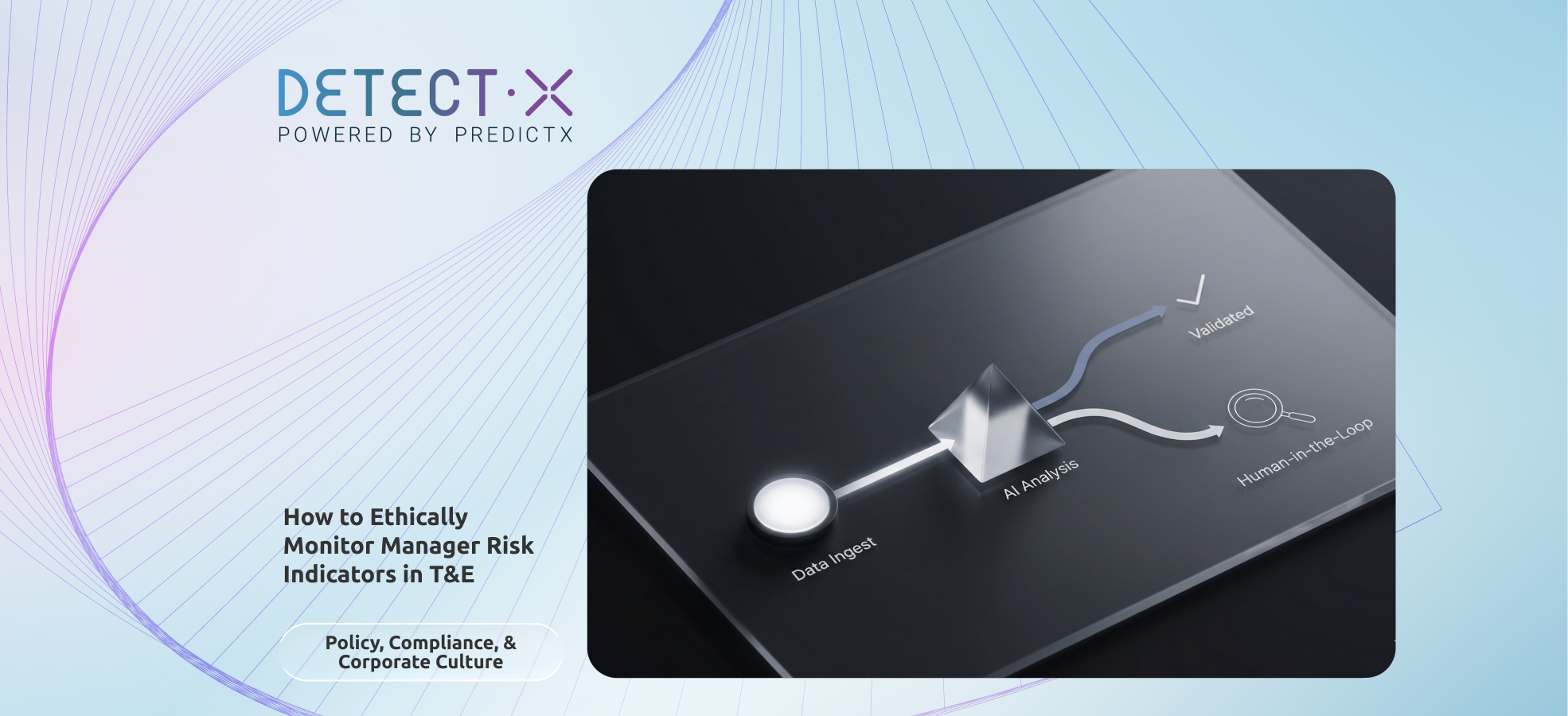
- Human-in-the-Loop: Humans remain ultimately responsible for AI outputs, ensuring that automated policy enforcement supports rather than replaces human judgment.
What specific manager risk indicators should a modern travel and expense management system monitor?
To achieve true financial control, businesses must look beyond the individual transaction and analyze behavioral patterns. Behavioral pattern analysis helps identify patterns requiring additional training or intervention.
Effective corporate expense management requires tracking specific manager risk indicators, including:
- Frequency of Policy Violations: Tracking the frequency of policy violations found within approved reports highlights managers who consistently miss non-compliant spend.
- Approval Timing: Analyzing the speed of approvals can surface gaming behavior or managers who are not dedicating sufficient time to review.
- Documentation Compliance: Monitoring whether managers approve claims with missing or non-compliant receipts indicates a breakdown in business oversight.
- Hierarchy-Aware Checks: Utilizing secure HR data integration flags scenarios such as a manager acting on a subordinate's claim inappropriately.
Spend Privilege Matching: Automatic flagging occurs when spending does not align with a role, such as a junior employee booking a luxury hotel, and the manager approves it regardless.
How does next-generation AI transform this from a punitive exercise into proactive fraud prevention?
Next-generation AI is the definitive resolution to the rubber-stamping crisis. Instead of waiting for a post-payment audit to catch errors, AI automation platforms intervene in real time. This proactive fraud prevention approach transforms the narrative from punishing managers to actively supporting them against modern fraud challenges.
By deploying advanced tools like a Cogent AI co-pilot, the burden of manual review is drastically reduced. Fully compliant reports are approved instantly through smart auto-approval. Meanwhile, clear violations are automatically returned to employees with detailed explanations, meaning reviewers only audit expense lines requiring human intervention. This intelligent expense approval software provides managers with instant case context, presenting a complete audit history accessible immediately. Furthermore, features like "Approve with Warning" allow workflows for minor violations to proceed while flagging issues for manager awareness. This data-driven approach fosters a culture of accountability, delivers quantifiable ROI in expense management, and empowers leaders to optimize spend effectively.
Related Posts

From Manual Audits to Strategic Oversight: A New Era for Finance Leaders

The Hidden Cost of Manual Audits: How AI Automates Expense Review & Boosts ROI
